Musk v Altman Part 2: OpenAI Won By Default, But the Bigger Question Remains Unanswered
If an AI company is founded on a public-benefit mission, who holds it to that mission once the money, power and commercial incentives start to take over? That question remains unanswered.
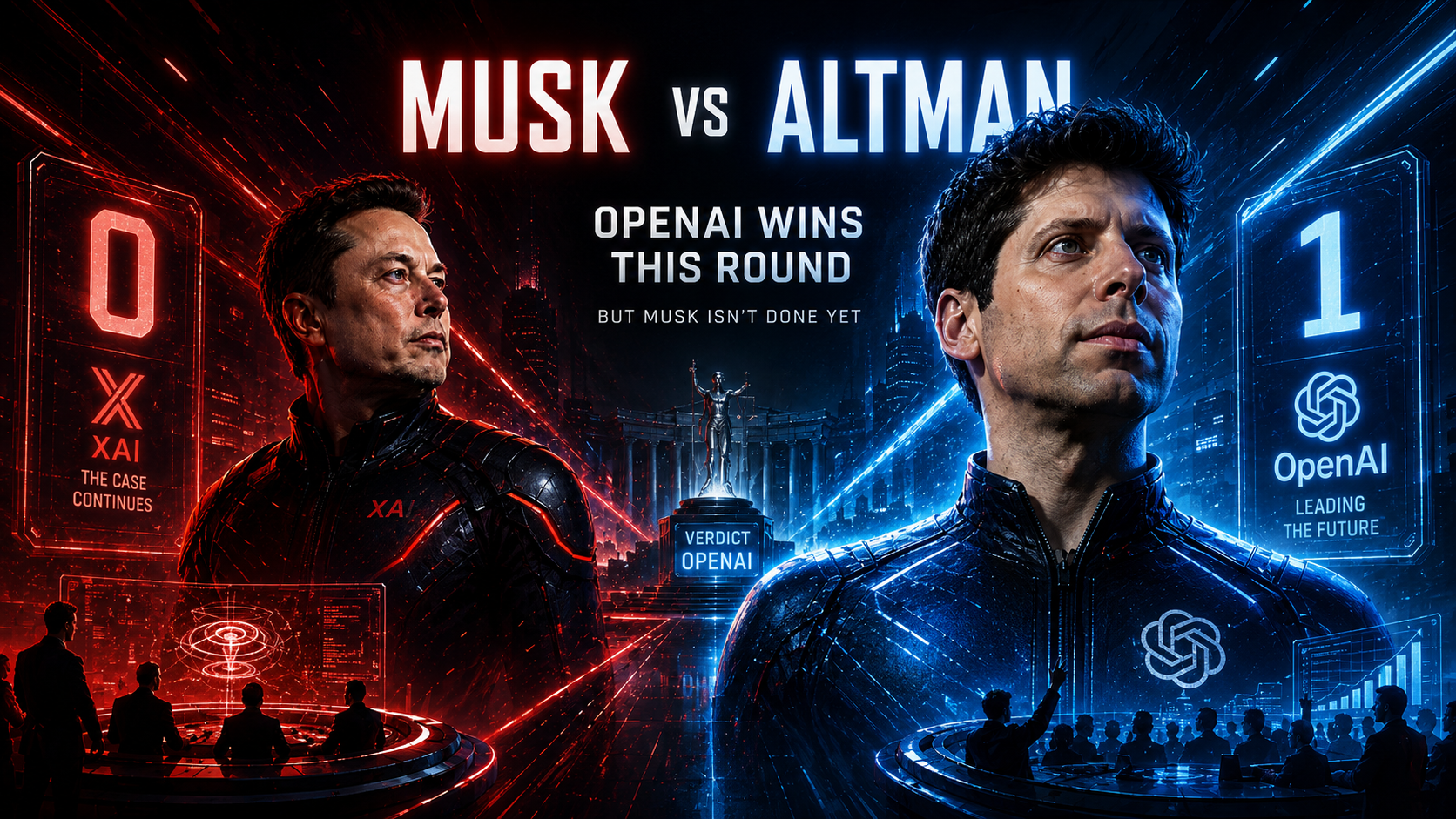
When I first wrote about Musk v Altman, the case looked like another Silicon Valley ego clash. A high-profile bust-up dressed up as a legal quandary.
It had all the ingredients of a high-profile feud. Elon Musk, Sam Altman, OpenAI, billions of dollars and bruised egos, with the perfect mix of idealism and self-interest. But beneath it all, a much more important question lay await: If an AI company is founded on a public-benefit mission, who holds it to account once money and power start to take over? Altman and OpenAI won this time, but that critical question remains unanswered.
OpenAI won on a technicality when a federal jury in Oakland rejected Musk’s claims, finding that he had brought the claim too late (a limitation issue). The jury reached its decision in less than two hours after a three-week trial.
Winning a case on limitation grounds is not the same as winning the argument on governance. It's still a win, of course. I've won a few high-stakes trials in my time on a technicality, and they're important wins, but they're won on preliminary points of argument before any main issues are addressed and openly argued in court.
In practical terms, this leaves Musk with very little room to manoeuvre in this claim. Limitation wins are usually legally decisive, even if they can feel unsatisfying to the outside world. They close the case without necessarily answering the bigger question: whether OpenAI’s evolution from non-profit idealism to commercial AI giant still sits comfortably with the mission it was originally built around.
But OpenAI’s legal team did their job. They found the cleanest route to victory, and took it. In litigation, an efficient win is still a win. It's like hitting the bullseye with a bow and arrow, while the rest of the arsenal remains untouched.
Why It Still Matters
OpenAI wasn't originally sold to the world as just another venture-backed tech company. It was founded with a more ambitious, almost moral, proposition, to develop artificial intelligence for the benefit of humanity. That founding story gave OpenAI a level of trust and legitimacy that most companies could only dream of and it made OpenAI feel different. Not just another company trying to win a market, but an organisation trying to steward one of the most important technologies ever created for mankind.
The difficulty OpenAI faced is that frontier AI is brutally expensive. Computational power, talent, safety research, legal, product development, infrastructure and global deployment, all cost copious amounts of money. This is where the case becomes more interesting than the verdict because OpenAI’s answer was not simply “we didn’t change.” It was closer to “building frontier AI requires capital, and Musk knew that.” That may have been commercially persuasive, and difficult for Musk's legal team to argue against, particularly given Musk's business prowess, but it still leaves the governance question unresolved.
The more interesting question is whether existing legal structures are capable of dealing with companies that begin with a public-interest mission, attract trust and capital on that basis, and then become some of the most powerful commercial entities in the world.
We're not talking about another food delivery app or productivity tool. We're talking about systems that influence education, law, healthcare, finance, politics, employment, media, cyber security, and the way billions of people across the world access information. In that context, governance isn't simply corporate issue, it's the entire game.
What Does Musk Do Next?
He's already indicated that he intends to appeal the ruling but it's widely understood that any appeal will be an uphill battle. However, even if the appeal is likely to fail, I doubt this is the end of the battle.
Musk has too many incentives to keep the pressure on OpenAI; Ideological, personal and commercial incentives, given that xAI is now a direct competitor. This doesn't mean the arguments Musk puts forward are irrelevant though. Accountability is still an important issue, and Musk is a highly influential, albeit polarising figure. While the case failed, it might be the beginning of the public pressure campaign. Musk may lean into regulatory complaints, position xAI as the alternative model of AI development, or pressure regulators to scrutinise OpenAI’s relationship with Microsoft, its safety commitments and the role of its non-profit arm.
Regulators, investors, users, employees, competitors and the wider public, all have a role to play in shaping the next phase of AI governance and if OpenAI is moving towards an even more commercial future, the scrutiny around its structure, leadership and mission will only increase.
The trial also seems to have left some reputational bruising. Reuters reported that although Altman and OpenAI secured a legal victory, the trial aired uncomfortable internal disputes and accusations around leadership and trust, which to be honest have always circle around Sam Altman. This matters when you consider a large part of AI adoption is trust and transparency.
Governance, trust and transparency will define the next phase of AI development. The next major public dispute may not be about whether an AI company breached a contract, or whether a founder waited too long to sue. It may be about whether companies developing highly capable AI systems should be subject to enhanced duties around transparency, safety, governance, board independence and conflicts of interest. More importantly, it may force society to confront a much bigger question: are we comfortable allowing a handful of private companies to develop and control technology that could become core infrastructure for the modern world?
That's why this story is far from over.
Copywritten so don't copy me — Rizwan Mughal
riz@thelinkinglawyer.com